
Every winter, gastroenteritis season returns to daycares and schools. Highly contagious, this infection that parents fear can be alarming, especially in infants and young children. The real danger? Dehydration.
Winter and Young Children: The Perfect Storm for Gastroenteritis

When cold weather sets in, cases of gastroenteritis rise sharply. According to the 2024 report from the Sentinelles network, activity begins to increase from late November, peaks between mid-December and late January, and then gradually declines until mid-March.
Extremely contagious, gastroenteritis particularly affects babies and young children, especially those who attend daycare or other group settings.
Why Is Gastroenteritis More Common in Winter?
The viruses responsible (rotavirus, norovirus) survive better in cold and humid environments. Cold weather also encourages people to spend more time indoors. Close contact in enclosed spaces (daycares, schools, family gatherings, etc.) significantly increases virus transmission.
How Is Gastroenteritis Transmitted?
Gastroenteritis is mainly transmitted through contact. The virus is present in the stool or vomit of an infected person. It spreads when tiny contaminated particles are transferred from the hand to the mouth, either directly or via objects and surfaces such as toys, door handles, pacifiers, or bottles.
It can also be transmitted through direct contact with an infected person, including hugging, diaper changes, or helping with meals.
Why Does Gastroenteritis Affect Babies and Young Children More Often?
Young children frequently put their hands, toys, and other objects into their mouths and are not yet able to wash their hands properly. This is why, in daycare centers or schools, a single sick child can easily infect several others within just a few hours.
Similarly, when a child becomes ill, the virus often spreads to the entire household.
How Long Does the Virus Survive?
These viruses are extremely resilient. They can survive for several hours to several days on skin and surfaces.
How to Tell If Your Baby Has Gastroenteritis: A Closer Look at the Symptoms

🤮 Baby Vomiting or Feeling Nauseous
Vomiting is often one of the first symptoms to appear in cases of gastroenteritis. There is no strict rule regarding frequency: some babies may vomit only once at the beginning, while others may vomit after every attempt to eat or drink.
Parents often wonder how long vomiting lasts in babies with gastroenteritis. In most cases, the active vomiting phase lasts no more than 12 to 24 hours. Some children may not vomit at all or may only experience nausea. If a baby is too young to express this, nausea can be harder to detect, but loss of appetite or complete refusal to eat can be important warning signs.
💩 Baby Has Diarrhea
Diarrhea usually appears after the first episodes of vomiting (within 6 to 24 hours, sometimes later) but tends to last much longer, on average 4 to 7 days. Stools are loose to very watery, sometimes almost like water.).
🤒 Baby Has a Fever
In babies and young children, gastroenteritis is often accompanied by fever. This is not unusual: fever indicates that the body is fighting the virus. It may appear with the first episodes of vomiting or a little later, and usually lasts one to two days.
When a baby has a fever, what matters most is the child’s overall condition, rather than the exact number shown on the thermometer.
A baby who remains slightly smiling, alert, and willing to drink is far more reassuring than a baby who appears lethargic, drowsy, or unusually unresponsive.

Did You Know?
Even a moderate fever can speed up dehydration: the body sweats more and loses fluids more quickly.
All of these symptoms can lead to severe dehydration, which can be dangerous for a baby if nothing is done to prevent it.
How Should You Respond?
💦 Rehydrate, Rehydrate, Rehydrate!
This is the most important thing in cases of gastroenteritis. Between vomiting, diarrhea, fever, and loss of appetite, a baby can lose a significant amount of fluids. These losses must be replaced, as the consequences can be serious if nothing is done.
Water is essential for proper body function. If dehydration is left untreated, blood circulation becomes less efficient, organs receive less oxygen and fewer nutrients, and this can gradually disrupt the function of the kidneys, brain, and heart.
Did You Know?
Babies become dehydrated faster than adults because their bodies contain a higher proportion of water, they lose more fluids each day, and their still-immature kidneys are less able to compensate for these losses. As a result, dehydration can develop within just a few hours.
How Should You Proceed?
Here are some practical tips to help rehydrate your baby during gastroenteritis:
- If your baby has just vomited, wait 30 to 60 minutes afterward to allow the stomach to rest.
- Then offer very small sips, very frequently (for example, every 5 minutes), ideally using an oral rehydration solution (ORS).
- A helpful tip for very young babies: use a medicine dropper or oral syringe (such as the one provided with liquid paracetamol) to give fluids.
- If vomiting starts again, take another 30-minute break before trying once more.
- If your child tolerates these small amounts well, you can gradually increase the volume.
Did You Know?
Oral Rehydration Solutions (ORS)—available in pharmacies—are sachets to be dissolved in water that provide essential electrolytes that plain water does not contain. These electrolytes help water enter the body’s cells through the process of osmosis (for those who remember their middle school biology classes 🤓).
This is why it is possible to be dehydrated even while drinking large amounts of water if electrolytes have been lost.
🚨 When Oral Rehydration Is No Longer Enough
If, despite these measures, the child vomits everything they drink or shows several signs of dehydration, medical attention should be sought without delay.
Warning signs:
- Little or no urine output (dry diapers for more than 6 hours)
- Dry mouth, sticky tongue, absence of tears
- Dark circles or sunken eyes, sunken facial features, sunken fontanelle (in infants)
- Hypotonia (a “floppy” child), extreme fatigue, drowsiness
- Persistent skin tent: this is checked by gently pinching the skin on the abdomen or thigh – if it takes more than one second to return to normal, it is a sign of dehydration
- Weight loss
- Intense thirst (more easily noticed in older children)
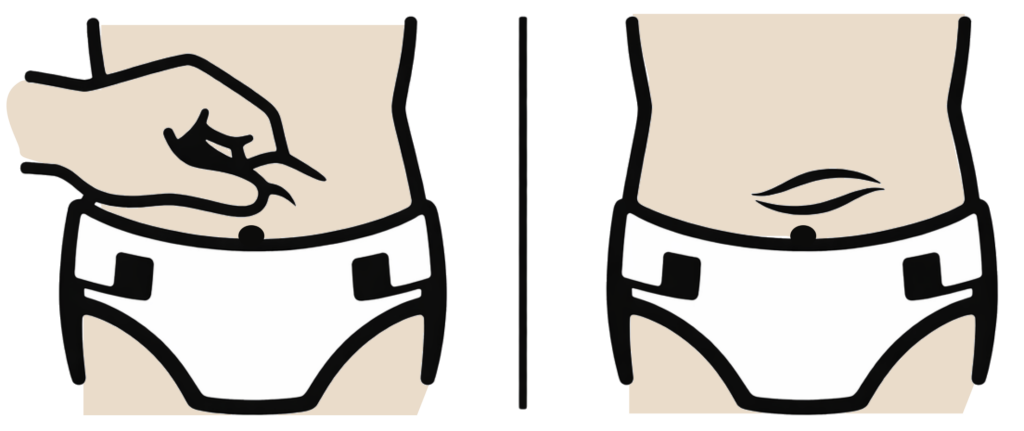
In these situations, intravenous rehydration (IV fluids) is often required in the hospital to quickly restore fluid and electrolyte balance.
This treatment is fast, highly effective, and generally allows for recovery within a few hours.
When and How Can Baby Start Eating Again ?
Feeding can be resumed as soon as your baby is willing to eat—there is no need to wait until all symptoms have completely resolved. The key principle is not to force eating, while always prioritizing hydration.
For babies who are breastfed or bottle-fed, feeding can be restarted gradually by offering smaller but more frequent amounts.
The same applies to babies who have started solid foods: offer small portions of simple, easy-to-digest foods, without forcing. It is perfectly fine to begin with familiar foods your child usually enjoys, in small quantities, without aiming for “nutritional perfection.” The main goal is simply that your baby eats a little, at their own pace. Appetite may remain reduced for a few days, which is completely normal.
Did You Know?
Some foods are not only well tolerated, they also tend to slow down intestinal transit.
Rice, carrots, bananas, and applesauce contain few irritating fibers and help make stools more solid, which can contribute to reducing diarrhea.
Sources
- Réseau sentinelle – 2024 Annual Report https://www.sentiweb.fr/
⚠️ The information shared on this website is intended to support parents in their daily lives. It does not replace the judgment of a healthcare professional or a medical consultation. If you have any doubts, never hesitate to seek advice from your doctor or pediatrician.